Some issues you have to decide on if you are being prosecuted
For most of our clients, being suspected of drink-driving is something that happens once – and only once.
That is of course a good thing, but it has the drawback that many people know nothing about their rights as a suspect, defendant or accused, or about police working methods, and are therefore at risk of receiving a harsher penalty than "necessary".
Many people say that "if they were stupid enough to drive under the influence, they'll have to take whatever penalty they get". We only partly agree. You should take your punishment, but there is no reason why you should have to serve time in prison when your neighbour further up the street does not – for a completely comparable drive.
Below is a short overview of some issues a suspect often has to decide on, with some tips.

The investigation
Arrested at the wheel during a routine check
If you have been stopped by the police at a routine check, it is difficult to claim that you were not the one driving.
After the police have stopped you, you will be asked to blow into a tube. Your breath is analysed in a device that indicates whether you have too much alcohol in your body.
These devices are not precise, but they give an indication of the level and help the police decide whether to take you in for a blood test to get an accurate result.
Unless there were special reasons why you drove, it is usually best to own up, admit it and cooperate with the police. That makes the court process simpler and the sentence shorter.
However, if you were not aware that you were under the influence, or you acted out of necessity or in self-defence, this advice does not automatically apply. The situation must then be assessed thoroughly.
That said, it takes a lot for a court to accept arguments of necessity or that you did not know you were under the influence. The rules are strict, and you yourself are responsible for making sure you are not under the influence when you drive.
If the police believe you are under the influence of alcohol or other substances, they can take you for further tests. There are then two options: an ordinary or an extended blood test. The ordinary test only measures alcohol in the blood, while the extended test also measures other substances such as medication and drugs.
If the police did not see you drive, they must provide other evidence that you were driving the vehicle and that you were under the influence at the time. This can be a difficult task, and the police must carry out an ordinary investigation, interviewing witnesses and gathering evidence.
Remember: you can be convicted of drink-driving even if the police have not taken a blood test from you!
Arrested afterwards
If the police did not see you drive, they must provide other evidence that you were driving the vehicle and that you were under the influence at the time. This can be a difficult task, and the police must carry out an ordinary investigation, interviewing witnesses and gathering evidence.
Remember: you can be convicted of drink-driving even if the police have not taken a blood test from you!
The investigative steps the police take when you were not caught in the act vary a great deal. Sometimes the police arrive right afterwards and can follow a fresh trail with a dog to where the driver is, as in the well-known case of the skier Northug. In other cases they must interview a number of possible witnesses who can shed light on the case, obtain information from mobile phone masts and so on.
The blood test analyses
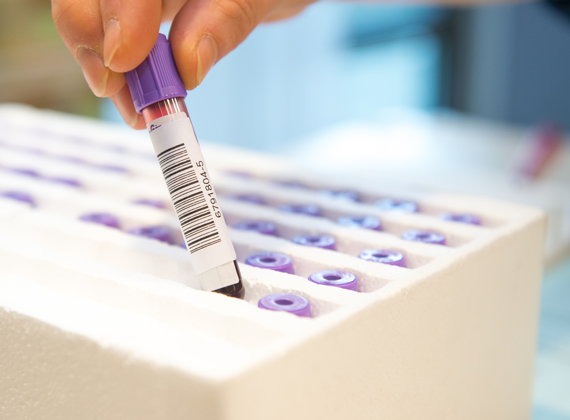
When will I get the results of my blood tests and level of impairment?
If you are taken to a police station that measures the alcohol concentration in your breath, you will get the result immediately. (This must not be confused with the breath test taken by the patrol at the place where you were stopped. That is only an indication.)
If you are taken for a blood test, the samples are sent for analysis. How long this takes depends on capacity and the number of cases. Normally you can expect a result after 2–3 weeks, but the police do not always pass on the result as soon as they receive it.
Contact us for help obtaining the analysis results and an assessment of them.
The court pays for the defence lawyer

In all criminal cases, a person who is indicted and brought to trial is assigned a defence lawyer paid for by the court.
This does not apply if you are charged with drink-driving and/or driving under the influence, or with driving without a licence.
You are always entitled to be assisted by a defence lawyer in the case, but the court may say that you must pay the lawyer yourself.
But there are also exceptions to the exception. In some cases the courts choose to pay for the defence lawyer after all if you apply. This may happen if you have a poor financial situation and risk immediate imprisonment if convicted.
We know the conditions well and help many people get their legal fees covered – sometimes in full, sometimes in part. Contact us to find out whether it is possible to have your costs covered if you hire a lawyer.
Don't be misled!

When you are arrested by or interviewed by the police, remember that not everything they say is correct.
Not necessarily to mislead you, but because they do not know everything about the law. It is the police lawyer who decides, so the patrol or the investigator sometimes promise more than they can deliver – or make incorrect statements.
Typical examples:
1) the police promise a reduced sentence if you confess, which turns out to be worth nothing
2) the police claim you do not need a lawyer in a drink-driving case because it is all so simple
3) the police say you are not entitled to a defence lawyer paid for by the court and always have to pay yourself
When will my case come up?

When will my case come to court?
We cannot give a definite answer. It depends on which court will hear the case, its capacity when the case arrives and, not least, whether the case will be decided as a guilty plea judgment or heard by a court with lay judges.
In general, if you have admitted the driving and want the case decided as a guilty plea judgment, in most cases it can come up within about 1 month of the court receiving it. If the case goes to a main hearing, it will usually take 3–6 months.
What takes time, however, is the police's handling of the case. There, a case may well sit for 2, 4 or 6 months before it is sent to court. Sometimes we have cases that have been with the police for 10, 11 or 12 months. In these cases there should usually be a noticeable reduction in the penalty. However, the police often fail to mention this when the case is sent to the district court, so if you do not look after your rights you may not get this reduction.
If the police have left your case for more than 6 months without doing anything at all, there are grounds to consider whether you are entitled to a reduced sentence.
How the case proceeds

What are the stages of a drink-driving case?
Criminal cases begin in the district court and are heard either as an ordinary main hearing (trial) with 3 judges and a representative of the prosecuting authority (the prosecutor), or as a guilty plea case where only the driver and 1 judge attend.
In guilty plea cases the court hearing is usually over in 30–60 minutes, while a main hearing can last several days depending on how many witnesses are called and how many documents must be examined. That said, a drink-driving case very rarely lasts more than one day.
In an ordinary trial (main hearing), the judges have not read the case documents in advance and know nothing other than the names of the defendant and the witnesses and what the defendant is charged with.
All evidence the prosecuting authority wishes to present of the defendant's guilt must come from the testimony of the witnesses who attend and from documents read out. In guilty plea cases there are normally no witnesses, and the judge relies on the case papers from the police and the defendant's statement.
In this context it is important to make sure that the police do their job and bring out not only what counts against the suspect, but also the mitigating factors. As a client of Promilleadvokaten you receive a fairly detailed description of how court hearings are conducted, what you should and should not do, what to wear and so on.
Guilty plea judgment or ordinary trial?

Should I choose a guilty plea judgment?
Many drink-drivers are best served by a guilty plea judgment. You get a slightly shorter prison sentence, avoid paying legal costs, have the case heard and decided sooner, and we learn the police's demand for punishment earlier, giving us more time to prepare a good defence on sentencing. But this requires that you admit and confess – not only that you drove, but also that you were under the influence.
If you are innocent, you should not accept a guilty plea judgment. The case must then go to a main hearing, and the prosecuting authority must prove that you are guilty. You should not have to prove that you are innocent.
The police's demand for punishment

Is the police's demand for punishment too harsh?
Most drink-drivers receive their sentence as a guilty plea judgment, and in these cases the police send their proposed penalty to the court before the hearing. This has the great advantage that we get the chance to check and take apart the police's demand for punishment well before the judge decides the case.
The police usually do a good job, but because of limited capacity they often take the easiest route and do not go into the same depth as a defence lawyer can. They are often most concerned with getting the case dealt with, while we are most concerned with getting the best possible outcome for our clients. Because we are paid to do so, we can dig deeper into the preparatory works and case law than the police and the courts have time for, and so find points and judgments that support your case.
Appeal
Will my case be heard again if I am not satisfied with the district court's judgment?
It is impossible to answer such a question in general terms. We must first go through the reasoning in the district court's judgment and assess whether an appeal has a chance of success.
If you are going to court and are unsure, ask for "time to consider". You then have 14 days to think the case through in peace and quiet, and you can call us to ask whether an appeal is worthwhile.
If the appeal is accepted, in the vast majority of cases we are appointed as defence counsel by the Court of Appeal, and you do not have to pay for the proceedings in the Court of Appeal yourself.
Electronic tagging

Will my case be heard again if I am not satisfied with the district court's judgment?
It is impossible to answer such a question in general terms. We must first go through the reasoning in the district court's judgment and assess whether an appeal has a chance of success.
If you are going to court and are unsure, ask for "time to consider". You then have 14 days to think the case through in peace and quiet, and you can call us to ask whether an appeal is worthwhile.
If the appeal is accepted, in the vast majority of cases we are appointed as defence counsel by the Court of Appeal, and you do not have to pay for the proceedings in the Court of Appeal yourself.
DNA testing

Can the police demand a DNA sample after a drink-driving conviction?
If you are convicted of drink-driving, the police can demand a DNA sample from you. Your DNA profile is then stored in the police DNA register. This also applies if drink-driving is your only conviction.
Many people feel this is a serious intrusion, and the question has been tried in the courts. In 2020 the Supreme Court of Norway held that it is lawful to register the DNA of a person convicted of attempted drink-driving (HR-2020-2372-A). The Supreme Court found that registration does not breach the right to private life under the European Convention on Human Rights.
The European Court of Human Rights in Strasbourg has since dismissed a complaint against the Norwegian scheme. The Court has therefore also accepted the Norwegian rules.
In other words, you cannot refuse to give a DNA sample. The profile may be stored for a long time, but you can ask for it to be deleted. The police must then consider whether it is reasonable to keep storing it.